An SEO audit example is a worked walkthrough of a real site's audit: the crawl data, the defects it surfaced, the cause behind each one, and what moved after the fixes. Most examples you'll find online are sanitized templates — green checkmarks, blurred domains — that teach nothing about diagnosis. This one is different. Below is the audit ImpressionMine ran against its own site: seven pages crawled, one backlink, an AI-visibility score of 58 out of 100, and a blog no crawler could reach. Every number comes from our own report, defects included.
What should an SEO audit example show you?
It should show findings tied to causes, not scores alone. A score is a symptom; an audit example that stops at a grade and a "needs work" label has shown you a thermometer and called it medicine.
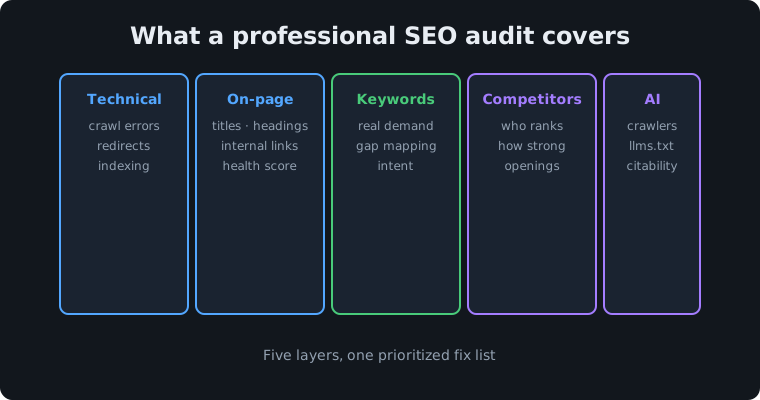
A complete audit works down through five layers: technical health, on-page structure, keyword coverage, competitor analysis, and AI visibility. A useful example demonstrates at least one finding per layer, and for each finding it should answer three questions: what the crawler saw, why the site produced that result, and what specifically changed after the fix. If an example can't connect those three, it's marketing collateral, not an audit.
What did the first crawl of our own site find?
The first crawl discovered seven pages, found exactly one backlink from one referring domain, and scored AI visibility at 58 out of 100. For a company that sells audits, that report was uncomfortable — which is exactly what made it worth publishing.
Three defects stood out:
| Defect | What was actually happening |
|---|---|
| Missing llms.txt | The server returned an HTML error page with a 200 status, so the file looked present to anything that trusts status codes |
| Orphaned blog section | Zero internal links pointed to the blog, so the crawler never reached it |
| Broken blog index cards | Card links were built from post titles instead of slugs, so every post URL returned a 404 |
The llms.txt finding is the instructive one. Nothing looked broken: the URL resolved, the status was 200, and only fetching the body revealed an error page where a plain-text file should be. The orphaned blog is mechanical. Pages that receive no internal links are invisible to a crawler, however good the content, which is why the crawl stopped at seven pages.
What was fixed, and what moved?
The blog was linked from the site's navigation, the index cards were rebuilt to use real slugs, and an actual llms.txt file replaced the fake 200. On the re-crawl, the tool discovered 13 pages instead of seven, and the AI-visibility score moved from 58 to 67.
Here is what we won't claim: which fix contributed which points. The score is a composite, and attributing the gain to any single change would be invention. The honest statement is that three defects were removed and a re-crawl confirmed the site was now reachable. Note also what didn't move — the backlink count stayed at one, because internal fixes don't create referring domains. An audit example that shows off-page metrics jumping days after on-site work is showing you fiction. To see how findings like these get packaged for a client, this SEO report example walks through the format.
Why publish an audit full of your own defects?
Because a sanitized sample teaches nothing, and a real one — with a fake 200, an unreachable blog, and a single backlink — teaches diagnosis. The instinct to hide the 58 is the same instinct that lets defects survive on your own site.
This post targets "seo audit example": 390 monthly searches, keyword difficulty 6, informational intent. The people searching it want to see a real one, and the only price of showing them is admitting our blog 404'd for a while. That trade is available to nearly every business, and almost nobody takes it.
What should you copy from this example?
Audit your own assumptions first, and verify every fix with a re-crawl. The sequence that caught our defects works on any small site:
- Crawl your site and count the pages found. Fewer pages than you've published means an internal linking problem, not a content problem.
- Fetch what key URLs actually return, not what their status codes claim. Our llms.txt "existed" — as an error page.
- Click every link your templates generate. Index and category pages fail silently; ours 404'd on every single post.
- Fix, then re-crawl. Confirm the result in Search Console rather than assuming the change took.
- Re-run whatever scored you. "58 to 67, seven pages to 13" is a defensible claim; "we improved the SEO" is not.
Run this quarterly alongside a broader local SEO checklist and you'll catch most structural failures before they cost rankings. And if you'd rather have the whole five-layer stack run for you, that's what our SEO audit services exist for — the example above is the same process, pointed at ourselves.
WRITTEN BY
ImpressionMine Team
SEO Research
Ready to mine your competitive edge?
Get MiningMORE FROM THE BLOG


