SEO audit services examine your website the way a search engine does — crawling every page, scoring every technical and content issue, and mapping what you rank for against what your market actually searches — then hand you a prioritized fix list. A real audit covers five areas: technical health, on-page content, keyword coverage, competitive position, and (in 2026) AI visibility. ImpressionMine's September 2026 keyword probe measured "seo audit services" at keyword difficulty 14 with a $44 cost-per-click — one of the highest-value, lowest-competition commercial terms in the entire SEO category, which tells you how many buyers want this and how few providers explain it plainly.
What does a professional SEO audit include?
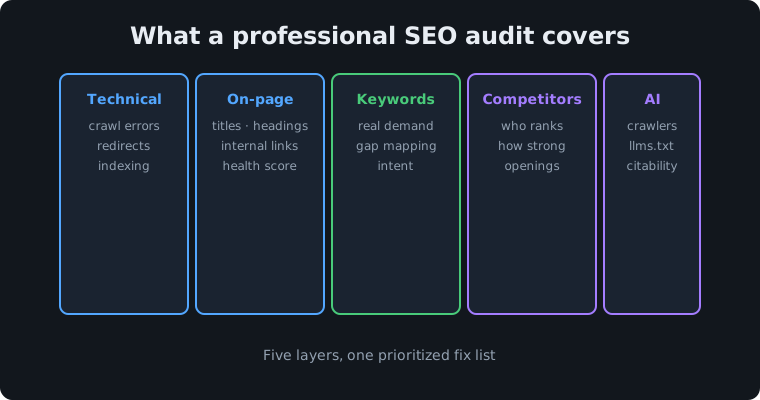
A professional SEO audit includes five layers, each answering a different question about why you aren't getting found:
- Technical crawl. Every reachable page checked for broken links, redirect chains, duplicate content, missing titles and descriptions, canonical errors, and index blockers — the fundamentals Google Search Central documents. This is the "can Google even read the site" layer.
- On-page scoring. Titles, headings, internal links, image alt text, and content depth graded page by page — usually rolled into a single health score you can track.
- Keyword and demand mapping. What you currently rank for, what your buyers actually search, and the gap between the two, backed by real search-volume data from providers like DataForSEO.
- Competitive position. Who owns the results you want, how strong they actually are, and where the openings are.
- AI visibility. Whether AI crawlers can access your site, whether your pages are structured to be cited, and whether machine-readable files like
llms.txtand JSON-LD schema exist at all — the layer covered in depth in our guide to AI SEO services.
How is an audit different from just running a tool?
A tool gives you a list of issues; an audit service gives you a sequenced plan. The difference is judgment: which of the 400 flagged items actually move rankings, which are cosmetic, and what order pays back fastest. Tools also stop at your own site — a service layers in the competitive read, because "your title tags are short" matters less than "these three competitors are beatable on these eight keywords."
That sequencing is where results come from. ImpressionMine's published Scissortail Fractional case study started with a site health score of 23 out of 100; the audit-driven rebuild took it to 90, and the site reached the top 10 for 11 of 11 target keywords within eight days of launch — six of them at #1.
What should an SEO audit cost?
Automated tool reports run free to about $100 and are worth roughly that. Professional audit services generally price between $500 and $5,000 depending on site size and whether competitive and keyword research are included; agency audits attached to retainers often bury the cost in the monthly fee. ImpressionMine's SEO audit crawls up to 500 pages and ships inside its strategic report offers — a $2,485 one-time report or the $3,895/month done-for-you engagement, priced in full here — so the audit arrives already attached to the keyword demand map and competitor analysis that make it actionable.
How often should you audit your site?
Audit fully once, then re-audit on change: a redesign, a platform migration, a traffic drop, or an algorithm update that moved your rankings. For most local businesses that means one deep audit per year with quarterly health checks. Continuous "audit dashboards" mostly re-detect the same issues — what compounds is fixing the list, then investing in the competitor keyword research that tells you what to build next.
What are the signs you need an audit now?
If any of these are true, an audit pays for itself: traffic has slid for two consecutive months with no seasonal explanation; you publish regularly but nothing ranks; your site was rebuilt or migrated in the past year and nobody checked the redirects; you outrank no one for your own service in your own city; or you have never seen your site's health score at all. Every one of those has a specific, findable cause — the audit's whole job is naming it, pricing the fix, and putting it in order.
WRITTEN BY
ImpressionMine Team
SEO Research
Ready to mine your competitive edge?
Get MiningMORE FROM THE BLOG


