
Automated SEO reports are worth setting up for exactly three things: collection, scheduling, and consistency. A machine pulls rankings, crawl results, and visibility data on the same day every month, the same way, without anyone forgetting. What automation cannot do is diagnose — connect a falling metric to its cause and sequence the fixes. The honest standard: automate the gathering; pay a human for the diagnosis. A report that arrives on schedule but never says why a number moved is a subscription, not a service.
What does automation do well in SEO reporting?
Automation is good at anything repeatable: pulling the data, running on a schedule, and measuring the same way every time. Those three properties are the entire value.
Collection first — rank positions, crawl counts, indexation status, and backlink totals are slow and error-prone to gather by hand. Scheduling second: a report that lands on the first of every month gets read; one that depends on someone remembering does not. Consistency is the underrated third. Trend lines only mean something when the measurement method never changes, and a scheduled probe produces a series you can act on. If numbers, on time, measured identically is all you need, automation alone is the correct purchase.
Why can automation not diagnose?
Because diagnosis means connecting a finding to its cause and deciding what to fix first, and both steps need context the tool does not have. Software can say a score dropped; it cannot say why, or whether the drop matters more than everything else it flagged.
A crawler can report that pages fell out of the index. It cannot know you migrated templates last Tuesday, that a developer noindexed a live pattern, or that the pages were thin duplicates that deserved to go. Sequencing is worse: tools rank findings in severity buckets the vendor invented, not in the order that protects your revenue. Diagnosis and sequencing are the parts a report exists to deliver, and precisely the parts a machine skips.
What should an automated SEO report contain?
Every metric in a worthwhile report should arrive with three attachments: the defect list that produced it, the change since last period, and a cause note written by a person. A number with none of those is decoration.
Our own audit shows the difference. The first crawl of impressionmine.com found 7 pages, exactly one backlink from one referring domain, and an AI-visibility score of 58/100 — each figure paired with the defects behind it. After the fixes, the re-crawl found 13 pages and the score moved to 67. We will not claim which fix moved it; no honest report attributes a gain to a single change. But every number carried a cause trail, which made the report actionable. The section-by-section structure lives in our SEO report example, and the full worked audit shows those defect lists at full length.
How do you spot a report mill?
Three tells: the narrative never changes month to month, metrics arrive with no defect list, and scores come with no causes. Any one of them means you are paying for a template, not analysis.
The market invites it. Our September 2026 national probe puts "automated seo reports" at 390 monthly searches with a keyword difficulty of 16 — small and easy — yet the results page is competitive, because every reporting vendor wants a buyer who stops reading at the score. The test: diff two consecutive months of your report. If the prose is identical and only the numbers changed, the prose was never analysis. Then ask what last month's report told you to fix, and whether this month's says if it worked. Silence on both is your answer.
Why does AI visibility belong in the report?
Because a growing share of prospects ask an assistant instead of scanning results pages, and rank tracking alone says nothing about whether those assistants can see you. A report that only tracks positions measures a shrinking channel.
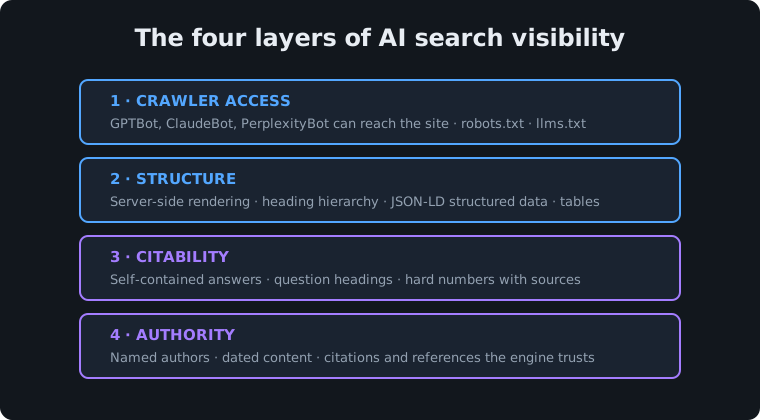
AI visibility breaks into four checkable layers: crawler access (can AI crawlers fetch your pages), structure (can a machine parse the content), citability (does each page contain direct, extractable answers), and authority (do independent sources corroborate you). Every layer can be probed on a schedule — a natural fit for automated collection, and, like every metric, useless without a person explaining which layer is failing. That layered check is exactly what a local SEO audit tool should run on a schedule.
Should you buy an automated report at all?
Buy automation for collection, and refuse to pay analysis prices for it. If your need is numbers on a schedule, free sources cover most of it — Search Console exports the query and page data that matters most, and a mill's PDF adds little on top.
Pay only when a person will connect findings to causes and sequence the fixes. That is what our one-time strategic report is — a human-diagnosed audit with a prioritized fix list, priced at $2,485 on our pricing page, not a recurring template. If a vendor cannot show a sample with defect lists and cause notes, keep your money: the schedule is the only thing they are selling, and a calendar is free.
WRITTEN BY
ImpressionMine Team
SEO Research
Ready to mine your competitive edge?
Get MiningMORE FROM THE BLOG


